De Beers Child Labour Policies and the Company’s Commitment to Ethical Mining
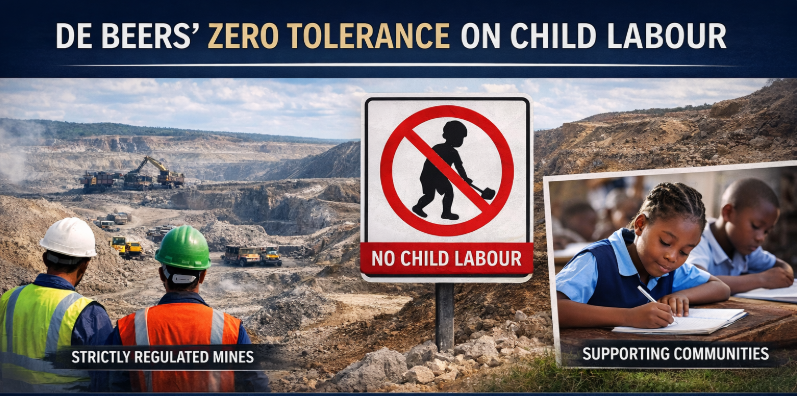
In today’s global business environment, ethical responsibility is no longer optional it is a defining measure of long-term credibility. Within the diamond industry, De Beers has consistently positioned itself as a leader in responsible sourcing, transparency, and human rights protection. One of the most critical issues the company actively addresses is child labour, an area where De Beers maintains a zero-tolerance policy across its operations and supply chain.
A Firm Stand Against Child Labour
De Beers operates its mining activities under strict international labour standards, including compliance with International Labour Organization (ILO) conventions and local labour laws in every country where it operates. The company’s mines, particularly in Botswana, Namibia, South Africa, and Canada, are subject to regular audits and oversight to ensure ethical employment practices.
The topic of De Beers Child Labour is often raised in broader discussions about the mining sector, but it is important to distinguish between regulated industrial mining and unregulated artisanal mining found in some regions. De Beers’ operations are industrial, highly regulated, and monitored, with no child labour permitted at any stage of extraction, processing, or transportation.
Strong Governance and Supply Chain Transparency
De Beers has also played a key role in strengthening traceability across the diamond value chain. Through initiatives such as the Kimberley Process and its own internal Best Practice Principles (BPP), the company ensures that diamonds are sourced responsibly and that labour rights are protected from mine to market.
Employees and contractors are required to meet strict age verification requirements, and third-party suppliers are assessed regularly to ensure compliance with De Beers’ ethical sourcing policies. This governance framework reinforces the company’s public commitment that child labour has no place in its operations.
Brand Engagement, Shows, and Global Collaborations
Beyond mining, De Beers has been increasingly active in brand engagement through global exhibitions, luxury showcases, and creative collaborations. In recent years, the company has organized and participated in high-profile jewelry shows and fashion events that celebrate craftsmanship, heritage, and responsible luxury.
Collaborations with designers, retailers, and cultural platforms have allowed De Beers to communicate its values to a wider audience emphasizing sustainability, transparency, and ethical sourcing as core pillars of modern luxury. These initiatives reflect a shift toward storytelling that highlights not just beauty, but responsible business practices behind every diamond.
Commitment to Communities and the Future
De Beers’ long-standing partnership with the Government of Botswana is often cited as a model for responsible resource development. Revenue generated from diamond mining has contributed to education, healthcare, and infrastructure development, helping reduce socio-economic conditions that often lead to child labour in unregulated sectors.
By investing in communities and maintaining strong governance, De Beers reinforces its position that ethical business and commercial success can coexist. Discussions around De Beers Child Labour should therefore be grounded in verified practices, transparent reporting, and the company’s demonstrated commitment to responsible mining.
Conclusion
As scrutiny around ethical sourcing continues to grow, De Beers remains one of the most closely monitored and regulated players in the diamond industry. Its zero-tolerance policy toward child labour, combined with robust auditing, community investment, and global brand engagement, underscores a clear message: responsible mining is not just a promise, but a practice.